
Optimizing Volleyball Rotations: The 6-2 vs 5-1 Comparison
Analyze rotation math and offensive efficiency to choose between 6-2 and 5-1 systems for competitive club volleyball teams.
By VolleyLab Coaching Staff
The Mechanical Differences of Modern Systems
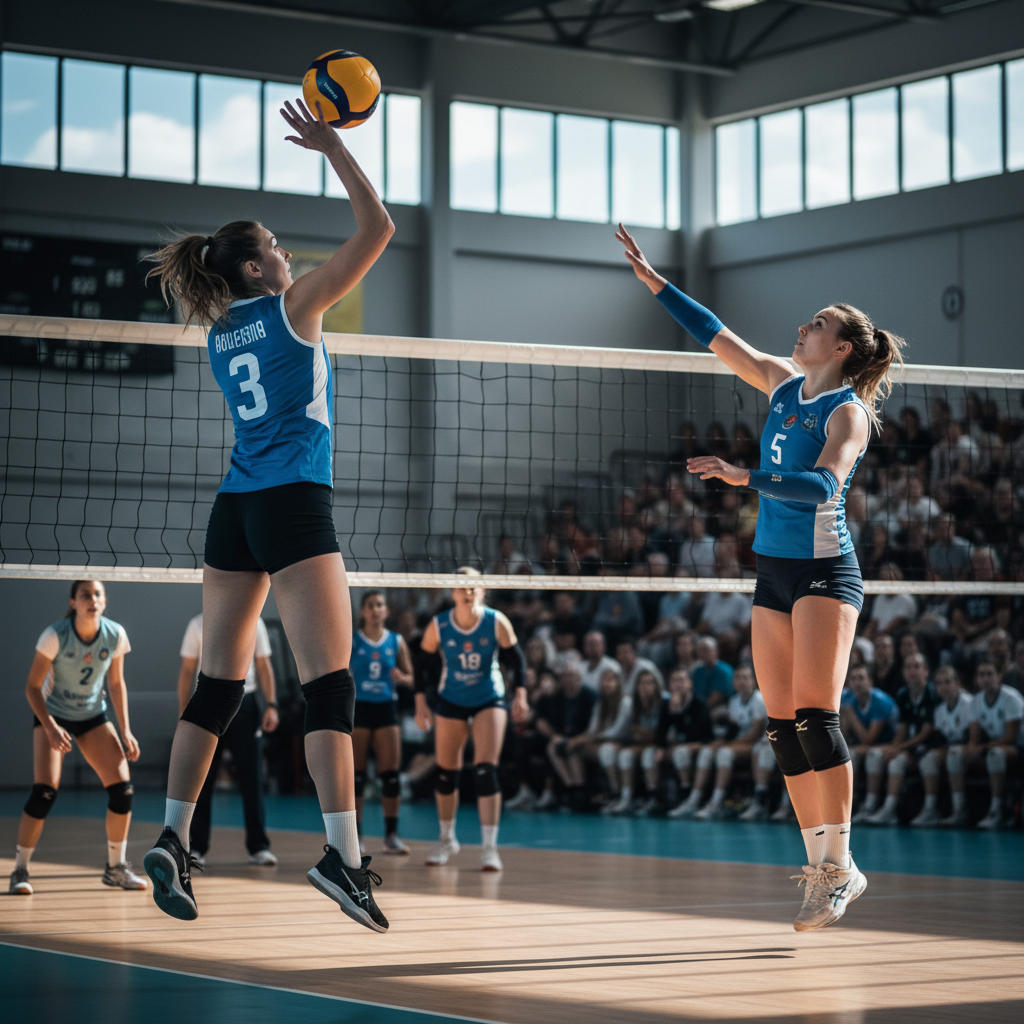
The choice between a 6-2 and a 5-1 system defines the offensive identity of a club volleyball program. In a 5-1, a single setter handles all six rotations, transitioning from the back row for three rotations and acting as a front-row player for the other three. This creates a consistency in tempo and location that many high-level teams prioritize. Conversely, the 6-2 utilizes two setters who both act as attackers when in the front row and setters when in the back row. This ensures that the team always has three available front-row attackers, theoretically increasing the pressure on the opposing block.
Mathematically, the 6-2 provides 100 percent more attacking options from the right side compared to a 5-1 rotations 2, 3, and 4. However, this theoretical advantage only translates to points if the secondary setter is a proficient hitter and the primary hitters can adapt to two different styles of delivery. Club coaches must weigh the benefit of an extra attacker against the potential loss of rhythmic continuity between the setter and the middle hitters.
When the 5-1 System Claims Victory
The 5-1 dominates in environments where the setter is a high-level athlete capable of offensive production at the net. When a setter can dump, tip, or swing effectively in the front row, they force the opposing middle blocker to stay 'home' longer, creating more one-on-one opportunities for the pins. A 5-1 is also superior when the talent gap between the starting setter and the backup is significant. If the second setter provides a 15-20 percent drop in set quality, the advantage of a third front-row attacker is neutralized by poor hitting percentages.
The Connection Factor
Connection is the hardest metric to quantify but the most vital for winning. A single setter takes approximately 2,000 to 3,000 reps per month with the starting middles in a standard 12-hour weekly practice schedule. In a 6-2, those reps are split, meaning each setter gets roughly half the volume with the primary attackers. This often leads to timing issues on fast-tempo 'zero' or 'one' tempo sets, particularly during out-of-system plays where intuition replaces scripted movement.
Rotation Math and Scoring Spikes
The 6-2 wins when a team possesses deep rosters with high-utility right-side players. By substituting the setter for an opposite in the front row, the team eliminates the 'weak' two-hitter rotations. In a 5-1, rotations 2, 3, and 4 are traditionally the most difficult to score in because the setter is in the front row, leaving only two attackers. Data from competitive club matches show that side-out percentages often dip by 5 to 8 percent in these rotations if the setter is not an offensive threat.
- Rotation 1: Setter back-right, three hitters available.
- Rotation 2: Setter front-right, only two hitters unless the setter attacks.
- Rotation 3: Setter front-middle, block-heavy but offense-limited.
- Rotation 4: Setter front-left, difficult transition for most set types.
In a 6-2, every single rotation looks like 'Rotation 1' in terms of available hitters. This allows the offense to run a 'middle-lead' scheme where the middle blocker always has a pin attacker on both sides to distract the defense. For a club team with two elite opposites but no standout floor general, the 6-2 is the mathematically superior choice for Point Scoring (PS%) and Side-Out (SO%) consistency.
Criteria for Choosing Your Offensive Identity
Choosing a system is not about professional trends; it is about the specific personnel in the gym. Coaches should evaluate players based on a 40-set sample size during the preseason. If the team's hitting percentage (.k%) is .050 higher with one specific setter, the 5-1 is the clear path. If the hitting percentage remains stable but the block touch count increases with the 6-2's taller front-row presence, then the substitution-heavy system is justified.
The Substitution Limit Constraint
In many USAV and AAU club divisions, there is a 12-substitution limit per set. A 6-2 system requires two substitutions every time the setters cross the 10-foot line (the 'box'). Over a standard set, this consumes 6 to 8 substitutions just to maintain the system. This leaves very little room for defensive specialists or serving substitutions. If a team has weak back-row defenders among their pin hitters, the 6-2 may trap those players on the floor, leading to a defensive breakdown that the offense cannot outscore.
Implementation and Drill Design
To transition from a 5-1 to a 6-2, practice must focus on setter-attacker synchronicity. Use 'The Gauntlet' drill: 15 minutes of continuous setter-to-middle transitions where Settter A and Setter B alternate every three balls. This forces the hitters to adjust their approach timing against different set trajectories in rapid succession. Track the efficiency of these reps over a 4-week window. If the error rate does not drop below 12 percent, the team is not ready for the complexity of a two-setter system.
- Evaluate setter offensive efficiency: If the setter kills > 25% of their attacks, stay in a 5-1.
- Audit substitution needs: Assess if 12 subs can sustain a 6-2 plus defensive changes.
- Test hitter adaptability: Measure hitting percentage variance between setters.
- Review blocking height: Determine if the 6-2 prevents 'seams' created by shorter setters.
Ultimately, the 5-1 is a system of precision and rhythm, while the 6-2 is a system of volume and pressure. The decision should maximize the number of rotations in which the team is most likely to score a point on the first attempt. For most elite club teams, the consistency of the 5-1 outweighs the raw power of the 6-2, but the latter remains a powerful tool for rosters with exceptional depth at the opposite position.
Related VolleyLab resources
Keep going with these hand-picked reads and programs from the VolleyLab library:
Turn this article into a training plan
VolleyLab builds a weekly program based on your position, level, and goals — no guesswork.
Start free trial