
Mastering Libero Communication: Signals and Vocal Authority
Unlock backrow efficiency with expert libero communication tactics, including verbal cues, timing strategies, and essential calls for elite defensive coordination.
By VolleyLab Coaching Staff
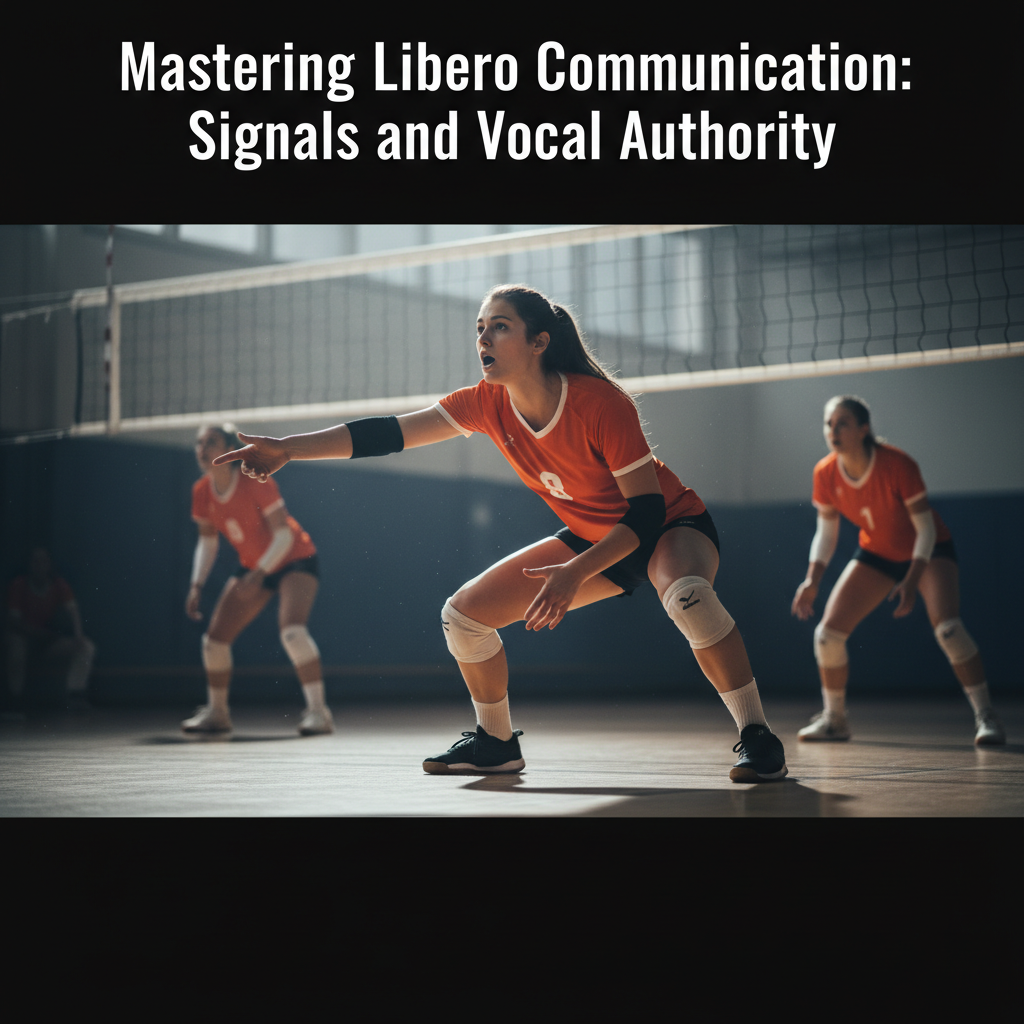
The libero serves as the tactical engine of the defense. While physical agility is the hallmark of the position, vocal authority defines its effectiveness. A silent defensive specialist is an incomplete asset, regardless of their passing percentage. In high-level volleyball, the difference between a controlled transition and a chaotic shank often comes down to three syllables spoken half a second before contact.
The Tactical Vocabulary of the Libero
Standardization is the enemy of confusion. Every backrow requires a shortlist of non-negotiable calls that are distinct and monosyllabic where possible. When the game speeds up, complex sentences fail. The libero must enforce a lexicon that minimizes cognitive load for their teammates.
- Mine/Me: The absolute claim of the ball; should be called twice for emphasis.
- Short: Immediate identification of a drop shot or campfire ball.
- Out: Clearly identifies balls traveling beyond the baseline or sidelines.
- Go/Push: Directs a specialized attacker or out-of-system setter to their spot.
- Over: Alerts the front row to a tight pass that may cross the net.
The 'short' call is perhaps the most critical for backrow defenders. Competitive hitters look to exploit the seam between the 10-foot line and the deep defenders. A libero who identifies this flight path within the first 15 feet of the ball's trajectory allows the perimeter players to move forward proactively rather than reactively.
Tone and Timing: When to Speak and When to Observe
Audio clutter is a common issue in club-level play. If every player is shouting 'here' or 'ball' throughout the entire rally, the truly vital information is lost in the noise. The libero must manage the volume of the court. Their tone should be authoritative and informative, not frantic. High-pitched, panicked yelling creates tension in the arms of passers, leading to rigid movements and poor ball control.
The Five-Second Rule
The most effective communication occurs in the window between rallies. During the five seconds before the server contacts the ball, the libero should scan the opposing offense and dictate the defensive alignment. This is the time to identify the 'hot' hitter or remind the middle blocker of their shading responsibilities. Once the whistle blows, the talk must shift from strategic to reactive.
Coordinating the Serve Receive Pattern
In a three-person receive pattern, the libero acts as the center-field commander. They are responsible for the 'seams'—the vulnerable areas between two passers. It is the libero's duty to determine who takes the seam before the serve is even launched. If a left-side attacker is struggling, the libero must verbally 'take' more of the court by saying, 'I have your left.'
During the flight of a hybrid or float serve, the libero's role is to track the ball's lateral movement. If the ball is 'tailing' towards a teammate's shoulder, a quick 'You' or 'Take' provides the confidence that player needs to commit to the pass. This eliminates the 'no-man's land' hesitation that leads to aces.
Defensive Transition and Block Guidance
The libero has the best view of the opposing hitter's approach and the gap in their own team's block. While the blockers are focused on the hitter's hand, the libero sees the entire court. They must communicate the block's position relative to the attacker. Common calls include 'Line is open' or 'Cross is closed.'
- Phase 1: Identify the opposing setter's location (front row vs. back row).
- Phase 2: Call out the number of attackers available.
- Phase 3: Track the primary attacker and call out 'Watch the slide' or 'Watch the pipe'.
- Phase 4: Post-contact, direct the setter to the best transition option.
When the ball is dug, the libero often becomes the secondary setter. If the primary setter takes the first ball, the libero must shout 'Setter' or 'Me' to indicate they are taking the second touch. This prevents the confusion that often occurs in the middle of the court during transition play.
Training the Vocal Reflex: Drills and Repetition
Communication is a skill that requires as much repetition as a platform pass. It cannot be expected to appear during a tournament if it is not present in the practice gym. Coaches should incorporate 'communication checks' into every drill. For example, during a standard 4x4 defensive drill, the libero should be required to name the hitter and the shot type (e.g., '14, Line!') before the ball crosses the net.
A useful exercise is the 'Silent/Loud' drill. For 10 minutes of wash play, the court is completely silent except for the libero. This forces the libero to realize how much the team relies on their direction and forces the teammates to listen specifically for that one voice. Following this, the team returns to full communication, often finding a much higher level of synergy.
Knowing When to Shut Up
Over-communication can be as detrimental as silence. During the precise moment of contact—whether it is a serve receive or a dig—passers need to focus on the ball's rotation and velocity. Constant chatter during the actual contact phase can be a distraction. The libero should aim for high-impact, low-frequency information. Once a teammate has committed to a ball and shouted 'Mine,' the libero should provide no further input other than 'Out' if the ball is traveling long.
The goal is to provide a safety net, not a soundtrack. By mastering the balance between assertive direction and tactical silence, the libero elevates the entire backrow from a group of individual athletes to a unified defensive unit. This vocal mastery translates directly to higher dig numbers and more efficient side-out percentages.
Related VolleyLab resources
Keep going with these hand-picked reads and programs from the VolleyLab library:
Turn this article into a training plan
VolleyLab builds a weekly program based on your position, level, and goals — no guesswork.
Start free trial