
Mastering Lateral Agility and Split-Step Timing for Defense
Improve floor defense with elite reactive ladder drills, split-step timing mechanics, and strength protocols for explosive lateral change of direction.
By VolleyLab Coaching Staff
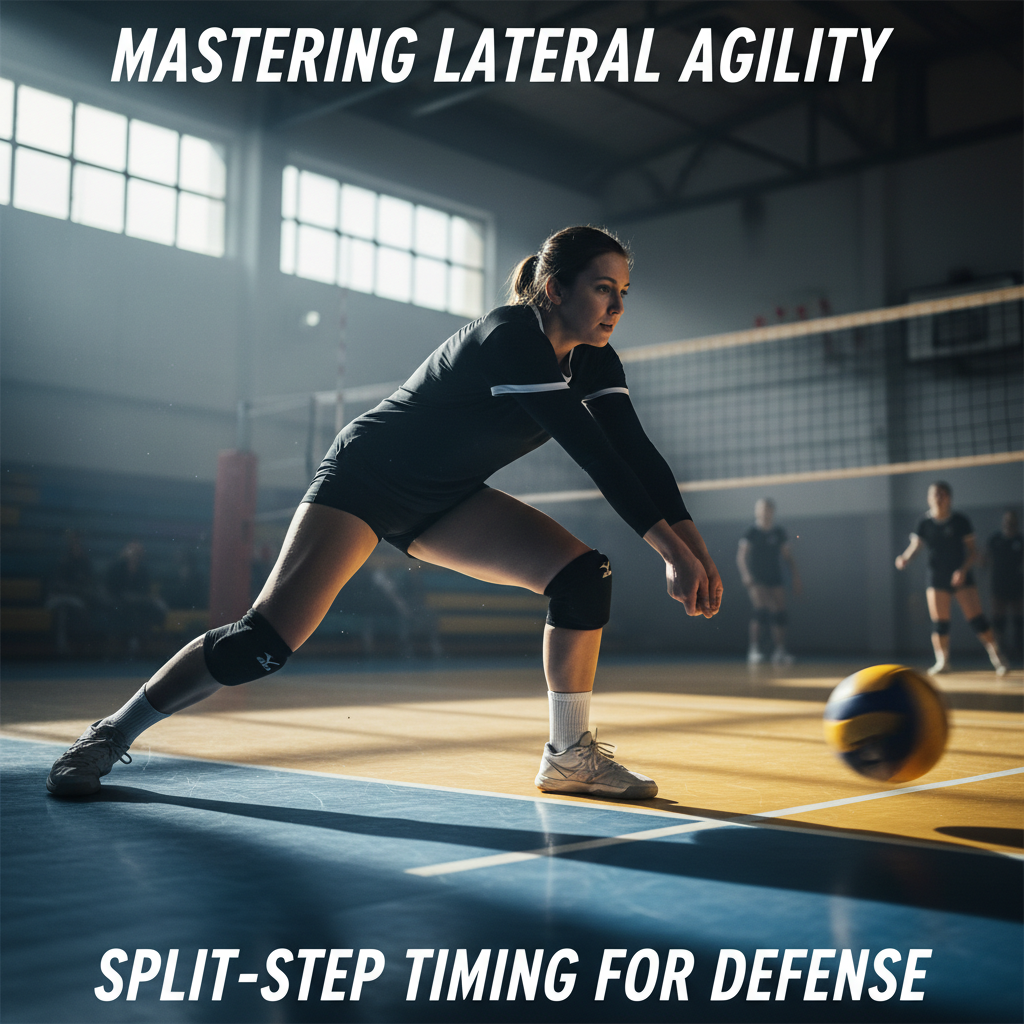
The margin between a successful dig and a shanked ball often comes down to milliseconds. In competitive volleyball, a back-row player must frequently cover 10 to 15 feet of court space in under one second. Achieving this level of efficiency requires more than just fast feet; it demands a coordinated integration of cognitive processing, rhythmic timing, and raw force production. High-level lateral movement is not a continuous sprint but a series of explosive bursts initiated from a specific pre-engagement posture.
The Mechanics of the Split-Step
The split-step is the foundational mechanism for elite reactive movement. It is a small, rhythmic hop that occurs just before the opponent contacts the ball. The objective is not height but the neutralization of body weight. By landing on the balls of the feet with a wide base at the exact moment of contact, the athlete loads the fascial system, creating a stretch-shortening cycle that allows for immediate propulsion in any direction.
Timing the split-step requires visual cues from the hitter. If the player lands too early, they become static and lose the elastic energy. If they land too late, they are still in the air when the ball is redirected, causing a delayed response. The optimal landing occurs roughly 0.1 seconds after the hitter's hand makes contact, ensuring the defender is 'light' exactly when the trajectory is identified.
Common Split-Step Errors
- Landing with heels flat, which kills lateral momentum.
- Jumping too high, increasing the time spent in the air where direction cannot be changed.
- Narrow foot placement, which requires an extra step to find a push-off angle.
- Mistiming the hop relative to the setter's release rather than the hitter's swing.
Reactive Ladder Work Beyond Foot Speed
Standard agility ladders are often misused as rhythmic dance tools rather than athletic stimulants. To translate ladder work to volleyball defense, the focus must shift from pre-planned patterns to reactive stimuli. Purely repetitive drills do not train the central nervous system to respond to the chaotic environment of a live rally. Defenders should utilize ladders to refine the 'zero-step'—the initial transitional movement from a stationary stance to a lateral push.
A specialized protocol involves a coach standing five meters ahead of the player. The player performs a simple lateral two-step in the ladder. On a visual signal or a tossed ball, the player must immediately exit the ladder and sprint to a designated target. This forces the athlete to break a rhythmic pattern to execute a high-velocity lateral move, mimicking the transition from reading a hitter to pursuing a deflected ball.
Ladder Drill Prescription
- Reactive Ickey Shuffle: 4 sets of 10 rungs with a visual trigger for a 3-meter exit sprint.
- Lateral Scissors to Sprawl: 5 repetitions, focusing on rapid hip turnover before dropping for a simulated pancake.
- Crossover Step-Ins: 3 sets focusing on the trailing leg driving across the midline to cover maximum distance.
Building Change of Direction Strength
Force production is the engine of agility. A defender cannot move faster than their ability to put force into the floor. The primary movers for lateral movement are the gluteus medius, adductors, and the vastus lateralis. Strengthening these muscles through unilateral loading ensures that the athlete can stabilize their center of gravity while moving at high speeds.
Lateral lunges and Cossack squats are non-negotiable for court coverage. These exercises should be performed with a focus on 'pushing the floor away' rather than just lifting the weight. By emphasizing the eccentric phase—the lowering—defenders build the deceleration capacity needed to stop mid-sprint and adjust to a change in ball flight. Without deceleration strength, players often over-run the ball or lose balance, leading to poor platform control.
Specific Force Production Exercises
- Lateral Heiden Jumps: 3 sets of 8 reps per side, emphasizing a 2-second stick on the landing.
- Single-Leg Box Drops: 4 sets of 5 reps to build reactive ankle stability.
- Band-Resisted Shuffles: 15-foot bursts to increase the recruitment of the hip abductors.
The Role of Hip Mobility in Transition
Rigid hips act as a bottleneck for speed. In volleyball defense, the hips must remain low while the chest stays upright. This 'hinge' allows the player to maintain a wide vision of the court while keeping the center of mass close to the ground. If the hips are tight, the defender will naturally stand taller as they move laterally, which increases their reaction time and makes lunging for a low ball significantly more difficult.
Incorporating dynamic hip internal and external rotation movements during warm-ups is essential. For example, 90/90 hip switches improve the ability to drop the lead hip when chasing a ball into the corner. An agile player is not just one who moves their feet quickly, but one who can manipulate their skeletal alignment to create efficient angles for force application.
Integrating Cognitive Load into Training
Defensive movement is ultimately a response to the environment. Training in a vacuum where the athlete knows where they are going is only half the battle. To truly improve court coverage, drills must include a decision-making component. Using colored cones or distinct verbal commands during agility work forces the brain to process information before the muscles fire.
A high-intensity reactive drill involves two shooters at the net. The defender starts in a neutral position. The shooters may tip, roll, or swing at random. This forces the defender to utilize the split-step to remain balanced and choose the correct movement pathway—crossover step for distance, or a shuffle step for precision—based on the ball's velocity and angle. This bridges the gap between mechanical capacity and game-day performance.
Progressive Training Volumes
Agility work should be performed at 100% intensity with full recovery. For lateral development, a work-to-rest ratio of 1:5 is recommended. A typical session might include two reactive ladder drills, two plyometric jumping exercises, and three sets of specific defensive movements. Total volume should not exceed 30 minutes to avoid the onset of fatigue, which degrades movement quality and increases injury risk.
Related VolleyLab resources
Keep going with these hand-picked reads and programs from the VolleyLab library:
Turn this article into a training plan
VolleyLab builds a weekly program based on your position, level, and goals — no guesswork.
Start free trial