
Mastering Middle Blocker Footwork and Reading
Improve your blocking efficiency by mastering shuffle and crossover patterns while learning elite hand-reading techniques for competitive volleyball.
By VolleyLab Coaching Staff
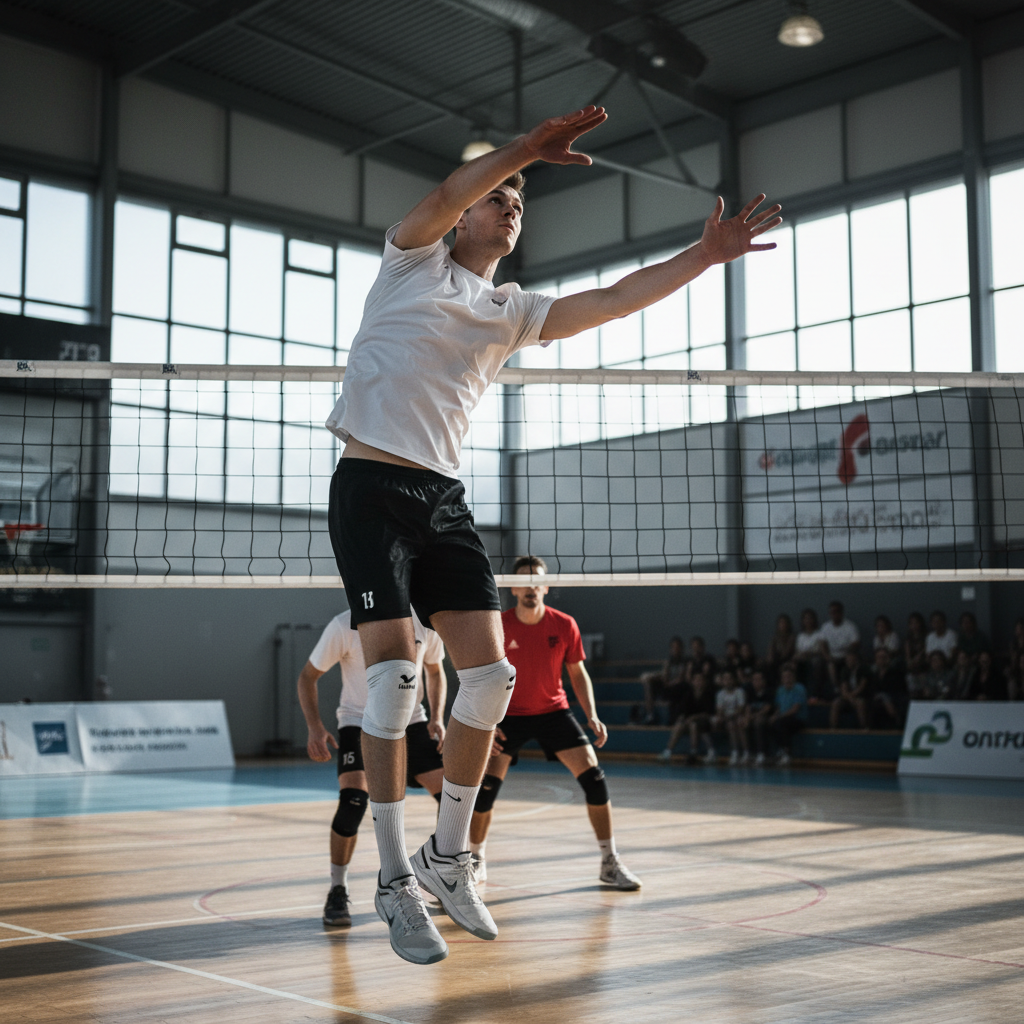
The Mechanics of Lateral Mobility
Competitive volleyball requires middle players to cover nearly 18 feet of net space in less than 1.5 seconds. Efficiency in movement is not merely a matter of speed but of physics and weight distribution. The primary objective is to move from the center position to the pin while maintaining a square posture to the net. Most errors in lateral movement stem from an inefficient first step or a failure to maintain a low center of gravity. At the club level, the difference between a deflection and a stuffed block often comes down to the final six inches of horizontal travel.
Choosing Between Shuffle and Crossover
The two foundational footwork patterns are the shuffle and the crossover. Choosing which to use depends entirely on the distance required and the speed of the opponent's offensive tempo. A shuffle step is utilized for short distances, typically when the setter is running a quick attack to the 31 or when the setter is tight to the net. It involves a lead step and a follow step, keeping the hips perfectly parallel to the tape. This allows for a quicker jump but limits the ground covered to approximately three to five feet.
The crossover step is the engine for reaching the antennas. This three-step movement—consisting of a lead step, a large crossover, and a squaring plant step—generates significant momentum. Athletes must focus on the second step, the 'drive' step, which should be explosive and cover the most distance. When moving to the right, the right foot opens, the left foot crosses over the right, and the right foot plants to square back to the net. This sequence must be executed in under 0.8 seconds to reach a high-tempo wing attack.
Comparison of Footwork Applications
- Shuffle: Best for interior attacks and 1-on-1 situations where timing is tighter than distance.
- Crossover: Essential for back-sets and high-ball sets to the pins where maximum speed is required.
- Hybrid: Incorporates a small shuffle before a crossover for better adjustment to setter location.
Reading the Setter's Hands
Anticipation is superior to reaction. Instead of watching the ball travel across the court, elite blockers focus on the setter's body language and hand positioning. The read begins with the quality of the pass. If the pass is off the net, the middle can eliminate the quick attack and drift toward the pins. If the pass is perfect, the read shifts to the setter’s spine and elbows. A setter whose back is arched usually intends to set behind them, whereas a flat back and high contact point often indicate an outside choice.
Visual cues at the point of contact provide the final piece of the puzzle. Watch for the angle of the wrists. Steep wrist angles generally push the ball to the pins, while a 'soft' touch often keeps the ball in the middle for a 1-ball or 31. Training the eyes to disconnect from the ball and lock onto the setter's hands for those crucial 200 milliseconds is the hallmark of defensive expertise. This split-second observation dictates whether the athlete initiates a shuffle or a crossover.
Closing the Block with the Wing
The most common defensive failure is the 'seam'—the gap between the middle and the wing blocker. Closing this gap requires the middle to be the primary mover. The wing blocker sets the 'bench' or the stationary point, and the middle must close fully to that teammate’s inside shoulder. This requires the final step of the crossover to be a hard plant that converts horizontal energy into vertical elevation. If the middle drifts while jumping, they create a moving target that makes it impossible for the back-row defenders to align themselves.
Drill Progressions for Mastery
- Isolation Shuffles: 3 sets of 10 reps in each direction focusing on hip height and low center of gravity.
- Wall Crossovers: 4 sets of 8 reps emphasizing a square finish against the wall with no gap between arms.
- Read-and-React: A coach sets balls from a basket; the blocker must identify the direction and execute the correct footwork within 1 second.
- The Closing Drill: Middle blockers move from center to pin to meet a stationary teammate, performing 20 repetitions to each side.
Optimizing Vertical Transfer
To effectively block at a high level, the lateral speed gained during footwork must be redirected upward. This is known as vertical transfer. If the second step of the crossover is too long, the center of gravity drops too low, making the final jump slow and heavy. Ideal footwork maintains a consistent height until the final plant. The arms should remain in a 'loaded' position—elbows slightly bent, hands at shoulder height—rather than swinging wildly during the movement. Excess arm swing during the approach leads to 'netting' errors and slows down the time to peak reach.
By mastering these specific patterns and developing a disciplined visual focus on the opponent's setter, middle blockers can transform from passive participants into dominant defensive anchors. Consistent repetition of the crossover step, paired with high-quality reading, ensures that the defense remains structurally sound regardless of the offensive tempo.
Related VolleyLab resources
Keep going with these hand-picked reads and programs from the VolleyLab library:
Turn this article into a training plan
VolleyLab builds a weekly program based on your position, level, and goals — no guesswork.
Start free trial